Have you ever found yourself navigating the aisles of a home improvement store, searching for the perfect riding lawn mower? You might have wondered, “Just how wide are these machines?”
Knowing the width of a riding lawn mower is crucial, especially if you’re planning to maneuver it through gates or store it in a shed. Imagine investing in a mower only to find it doesn’t fit through your garden gate or takes up too much space in your garage.
It’s a common concern, and you’re not alone in wondering about it. This article is here to answer that pressing question and guide you in making a smart purchase. You’ll discover the typical widths of riding lawn mowers and why size matters more than you might think. With this information, you can confidently choose the right mower that fits your needs and your space perfectly. Ready to uncover these details and ensure your next purchase is hassle-free? Let’s dive in!
Riding Lawn Mower Widths
Riding lawn mowers typically range from 30 to 60 inches in width. Smaller models are ideal for tight spaces, while larger ones cover more ground efficiently. Understanding these width options helps in choosing the right mower for your yard’s size and terrain.
Choosing the right riding lawn mower can be a game-changer for anyone looking to maintain their yard efficiently. One of the key factors to consider is the width of the mower. It affects how quickly you can finish mowing and how easily you can navigate around obstacles. If you’re tired of spending hours cutting grass or struggling with tight corners, understanding riding lawn mower widths could be your ultimate solution.Understanding The Standard Widths
Riding lawn mowers come in various widths, typically ranging from 30 to 60 inches. The width you choose can significantly impact your mowing experience. A wider deck, like 60 inches, covers more ground quickly. It’s perfect for large yards, reducing the number of passes you need to make.Compact Mowers For Smaller Yards
For those with smaller lawns, a compact mower with a width of around 30 inches might be ideal. It offers greater maneuverability, especially in yards with intricate landscaping. You won’t have to worry about squeezing through narrow garden paths or tight spaces.The Versatile Mid-range Options
If your yard is moderately sized, consider a mid-range mower, typically about 42 to 48 inches wide. It strikes a balance between coverage and maneuverability. This size is versatile enough for most suburban lawns, offering efficient mowing without sacrificing control.Impact Of Width On Storage And Maintenance
Have you considered where you’ll store your mower? Wider mowers might pose a challenge if you have limited garage or shed space. Additionally, maintenance becomes crucial as wider mowers often have more components, needing regular checks to ensure optimal performance.Tailoring The Width To Your Needs
Think about your lawn’s unique features. Do you have many trees or flower beds? A narrower mower could save you time in tricky spots. On the other hand, if your yard is a vast expanse, a wider mower could be the time-saving hero you need.Personal Experience: Finding The Perfect Fit
When I first bought my riding mower, I underestimated the importance of width. I went for a wider model, thinking it would speed things up. But navigating around my garden’s intricate design became a hassle. I eventually switched to a mid-range model, which offered the perfect balance and transformed my mowing routine. Choosing the right riding lawn mower width is more than just a number—it’s about matching the machine to your yard’s personality. What are your yard’s specific needs? Consider them carefully, and you’ll find a mower that turns a chore into an enjoyable task.Factors Influencing Mower Width
Riding lawn mowers vary in width due to several factors. Terrain type, lawn size, and mower design all play a role. Wider mowers cover more ground quickly but may struggle in tight spaces.
When choosing a riding lawn mower, it’s essential to understand what determines its width. A mower’s width can impact storage space, maneuverability, and cutting efficiency. Various factors contribute to the overall width, and knowing these can help you make an informed decision. Let’s explore how deck size, engine placement, and wheelbase with tires influence the width of riding lawn mowers.Deck Size
The deck size is a major factor influencing the width of a riding lawn mower. It refers to the cutting area beneath the mower, where the blades operate. A larger deck size means a wider mower, which can cover more ground in less time. However, it also requires more storage space. When I bought my first riding mower, I opted for a 42-inch deck. It was perfect for my medium-sized yard, balancing efficiency and storage needs. Consider the size of your lawn and storage area when choosing the deck size.Engine Placement
Engine placement significantly affects the overall dimensions of a mower. Front-engine mowers tend to be bulkier, adding to the width. These are often used for larger, more powerful mowers. Rear-engine mowers are generally more compact, making them suitable for smaller lawns. If space is a concern, you might prefer a rear-engine design. Think about the layout of your storage area and how much space you’re willing to allocate for your mower.Wheelbase And Tires
The wheelbase and tire size play a crucial role in the mower’s width. A wider wheelbase provides better stability and traction, especially on uneven terrain. This can be beneficial if your yard has hills or slopes. However, a wider wheelbase also means a larger turning radius. If you have tight corners or obstacles, a narrower wheelbase might be more practical. Reflect on your yard’s terrain and obstacles when considering wheelbase and tire dimensions. Choosing the right width for your riding lawn mower involves balancing these factors based on your specific needs. Have you considered how these elements will impact your mowing experience?Types Of Riding Lawn Mowers
Riding lawn mowers vary in width, typically ranging from 30 to 60 inches. Compact models suit smaller lawns, while larger machines handle expansive areas efficiently. Knowing the mower’s width helps in selecting the best fit for your yard size and storage space.
When you decide to purchase a riding lawn mower, understanding the different types can make all the difference. Each type caters to specific needs and preferences, offering unique features and benefits. Whether you have a sprawling estate or a compact yard, there’s a riding mower that fits your requirements and lifestyle.Rear-engine Riders
Rear-engine riders are perfect for small to medium-sized lawns. Their compact design makes them easy to maneuver around tight spaces and obstacles. Typically, they are narrower, ranging from 30 to 33 inches wide, allowing you to navigate through gates and garden paths effortlessly. You might find rear-engine mowers ideal if your yard is dotted with flower beds and small trees. They offer a great balance between power and size. Have you ever struggled with a push mower on a hot day? A rear-engine rider could be your saving grace, making lawn care a breeze without sacrificing storage space.Lawn Tractors
Lawn tractors are the workhorses of the riding mower world. They are versatile and can handle a variety of tasks beyond mowing, such as hauling and plowing. These mowers typically have a wider cutting deck, usually between 42 to 54 inches, making them suitable for larger lawns. If you’ve ever found yourself spending entire weekends mowing, a lawn tractor might be the solution. Its wider deck reduces mowing time, allowing you more free time to enjoy your well-kept garden. Imagine finishing your lawn care in record time and relaxing with a cold drink instead.Zero-turn Mowers
Zero-turn mowers are the sports cars of the mowing world. They are known for their exceptional maneuverability and speed. With cutting widths ranging from 32 to over 60 inches, they can handle both small and large areas efficiently. Do you enjoy the thrill of efficient, precise mowing? Zero-turn mowers offer just that with their ability to pivot 180 degrees, leaving no blade of grass uncut. They are perfect for those who value both performance and a pristine lawn. Have you ever dreamt of mowing patterns like a professional? A zero-turn mower can make that dream a reality. Choosing the right type of riding lawn mower depends on your yard’s size and your mowing preferences. What’s your ideal mowing experience? The answer might just guide you to the perfect mower for your needs.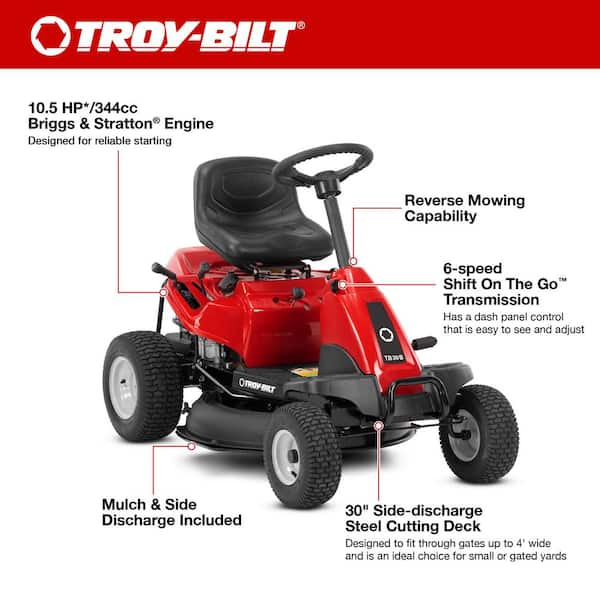
Credit: www.homedepot.com
Choosing The Right Width
Riding lawn mowers typically measure between 30 to 60 inches wide. A smaller width offers maneuverability for tight spaces. Larger widths cover more ground, saving time on big lawns.
Choosing the right width for your riding lawn mower can make a significant difference in your lawn care routine. It’s not just about picking the biggest or most powerful machine; it’s about finding one that fits your needs. A mower that’s too wide might be cumbersome, while one that’s too narrow could mean more time spent mowing. Let’s break down the key factors to consider when selecting the width that’s perfect for your yard and lifestyle.Yard Size Considerations
When thinking about yard size, ask yourself: how much grass do you have to mow? If your yard is expansive, a wider mower can save you time, covering more ground with each pass. A neighbor once opted for a narrower mower in his spacious yard and spent twice as long mowing. On the other hand, smaller yards might benefit from a narrower deck, ensuring precision and ease in tight spaces. Measure your yard and visualize the path your mower will take.Maneuverability Needs
Think about the obstacles in your yard. Trees, flower beds, and winding paths require a mower with excellent maneuverability. A wider mower might struggle to navigate these hurdles smoothly. You might recall a time when you had to constantly reverse or adjust your path with a bulky mower. Choosing a width that balances coverage and agility can make mowing more enjoyable. Consider mowers with adjustable deck widths to cater to different sections of your yard.Storage Space
Where will you store your mower? A wide mower can be a storage challenge, especially if space is limited. Picture your garage or shed—will a wider mower fit comfortably alongside other tools and equipment? A friend once purchased a large mower, only to find it barely fit in her garage, causing constant rearrangement headaches. Ensure your mower not only fits your yard but also your storage space. Measure your storage area before purchasing and keep future purchases in mind. Choosing the right width for your riding lawn mower is about finding harmony between yard size, maneuverability, and storage. So, what’s your ideal mower width?Impact Of Width On Performance
When selecting a riding lawn mower, the width can significantly impact its performance. A wider mower might cover more ground quickly, but it can also affect other aspects like cutting efficiency, fuel consumption, and maintenance. Understanding how width plays a role in these areas can help you choose the right mower for your yard.
Cutting Efficiency
A wider mower deck allows for greater cutting efficiency. It can cut more grass in a single pass, saving time and reducing effort. However, if your lawn has tight corners or intricate landscaping, a wider deck might struggle to navigate, leaving patches uncut.
Think about the layout of your lawn. If it’s spacious with few obstacles, a wide mower can be your best friend. But if you have a labyrinth of flower beds and trees, a narrower option might be more efficient.
Fuel Consumption
Fuel consumption often increases with the width of the mower. Wider decks require more power, leading to higher fuel usage. This can be a crucial factor if you’re mowing a large area frequently.
Consider how often you mow your lawn. If you’re doing it weekly, a wider mower could mean more trips to the gas station. Balancing width with fuel efficiency can save you money and time in the long run.
Maintenance Challenges
Maintaining a wide mower can come with its own set of challenges. Larger decks may have more parts that need regular upkeep. This means more time spent on maintenance, which can be a hassle if you’re not mechanically inclined.
Reflect on your comfort with maintenance tasks. If you’re handy with tools, a wider mower might not be a big deal. But if you’d rather not spend weekends tinkering, consider a narrower option that might require less attention.
As you weigh the impact of width on your mower’s performance, ask yourself: What’s more important, speed or precision? Will fuel costs outweigh the benefits of a wider deck? Are you ready for the upkeep of a bigger machine? Your answers can guide you to the perfect mower for your needs.

Credit: www.tractorsupply.com
Popular Models And Their Dimensions
Riding lawn mowers vary in width based on their models. Standard sizes range from 30 to 60 inches. Compact models offer narrower widths, ideal for smaller yards. Wider models provide faster coverage for large areas.
When you’re in the market for a riding lawn mower, understanding the dimensions of popular models can be a game-changer. Whether you have a small yard or sprawling acres, the right mower width can significantly impact your mowing experience. We’ll break down the dimensions of some popular models so you can make an informed choice that suits your needs.Compact Models
Compact models are perfect for those with tight spaces or smaller yards. These mowers typically have cutting widths ranging from 28 to 36 inches. Imagine having to maneuver around flower beds or garden paths. A compact model like the John Deere E100 may be your best friend. It provides the agility you need without compromising on power. Do you live in a neighborhood with narrow gates? A compact model can save you the hassle of constant adjustments. They fit easily through standard gates, making them a convenient choice for urban dwellers.Standard Models
If you’re looking for a balance between efficiency and maneuverability, standard models might be your answer. These mowers generally offer cutting widths of 38 to 48 inches. Consider the Cub Cadet XT1 as a popular choice in this category. It offers a broader cut without being cumbersome. With a standard model, you can cover a decent amount of ground quickly, which is ideal for medium-sized yards. Have you ever spent hours mowing? A standard model can reduce your mowing time while still being easy to handle. It’s a practical option that offers both speed and comfort.Wide-cut Models
For those with extensive lawns, wide-cut models are the way to go. These heavy-duty machines boast cutting widths of 50 inches or more. Picture a vast lawn with few obstacles. A wide-cut model like the Husqvarna TS 354XD can transform your mowing sessions. It tackles large areas efficiently, saving you time and effort. Thinking about the future? Investing in a wide-cut model can be more cost-effective in the long run. They are designed to withstand frequent use, making them a durable choice for larger properties. Choosing the right riding lawn mower involves more than just picking a brand. It’s about finding a model that fits your lifestyle and yard size. What are your mowing priorities, and how do these dimensions align with them?Width And Safety Concerns
Riding lawn mowers vary in width, typically ranging from 30 to 60 inches. Safety concerns arise from wider mowers, as navigating tight spaces and avoiding obstacles becomes challenging. Understanding mower width helps ensure safe and efficient operation in various lawn sizes.
When considering the width of riding lawn mowers, safety is a crucial factor you shouldn’t ignore. A wider mower might seem like a time-saver, but it also brings safety concerns you need to consider. From stability on slopes to navigating obstacles and maintaining operator visibility, each aspect plays a vital role in ensuring a safe mowing experience.Stability On Slopes
Wider mowers offer more stability on slopes, reducing the risk of tipping over. However, this doesn’t mean they’re invincible. You need to be cautious when mowing on hills, as even the broadest base can’t eliminate all risks. Have you ever felt that unsettling tilt on a slope? It’s a reminder to assess the angle before proceeding. Always consult your mower’s manual for maximum slope recommendations.Obstacle Navigation
While wider mowers cover more ground, they can struggle with tight turns and navigating around obstacles like trees and flower beds. You must plan your mowing route carefully to avoid getting stuck or damaging your landscape. Think about the layout of your yard. Are there narrow pathways or densely planted areas? A wide mower might not be the best choice if these are common features in your garden.Operator Visibility
Visibility is another critical safety factor to consider with wide mowers. A broader mower deck can obscure your line of sight, making it harder to spot obstacles or uneven terrain ahead. Have you ever mowed over a hidden rock or toy? Enhancing your visibility can prevent accidents like these. Adjust your seat and mirrors, if available, to get a clear view of your surroundings. When choosing a riding lawn mower, balance the benefits of a wide model with these safety concerns. What’s more important to you: saving time or ensuring maximum safety? Your decision could make all the difference in a smooth, safe mowing experience.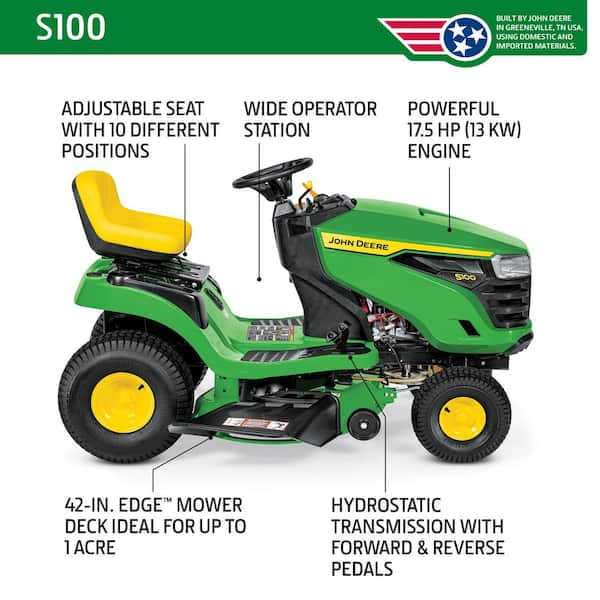
Credit: www.homedepot.com
Frequently Asked Questions
What Is The Average Width Of A Riding Lawn Mower?
The average width of a riding lawn mower ranges between 30 to 60 inches. It depends on the model and manufacturer. Compact models are around 30-40 inches wide, while larger models can be 48-60 inches. Always check the specifications for accurate dimensions before purchasing.
How Wide Does A Gate Need To Be For A Riding Lawn Mower?
A gate for a riding lawn mower should be at least 4 feet wide. Measure your mower’s width and add extra clearance for safe passage. Ensure smooth entry and exit by considering the mower’s turning radius.
How Wide Is A 42 Inch Riding Mower?
A 42-inch riding mower typically measures about 48 to 55 inches in overall width, including the deck and side discharge. Always check the manufacturer’s specifications for exact dimensions.
Will A 42 Inch Mower Fit Through My Gate?
Measure your gate’s width first. A 42-inch mower typically requires at least 44 inches clearance. Consider gate size adjustments if needed. Ensure safe entry and exit by accounting for maneuvering space. Check the mower’s specifications for precise dimensions. A wider gate enhances accessibility and reduces potential damage.
Conclusion
Choosing the right lawn mower width matters. It affects cutting efficiency and storage. A wider mower covers more ground quickly. A narrower one suits tight spaces. Consider your yard size and obstacles. Measure gates and storage areas. Different brands offer various widths.
Match the mower to your needs for best results. Efficient mowing saves time and effort. Explore options to find your ideal fit. Keep these factors in mind for a perfect choice. Happy mowing!