Have you ever found yourself stranded in a parking lot, unsure if your car battery is dead or just playing tricks on you? It’s a frustrating situation, especially when you don’t have a multimeter handy.
But don’t worry; there are simple ways to test your car battery without one. You can quickly find out if your battery is the culprit behind your car troubles using everyday items and techniques. Imagine the relief of knowing exactly what’s going on under the hood, and getting back on the road without unnecessary stress or expense.
This article will empower you with practical tips and tricks to diagnose your car battery’s health, all without the need for complex tools. Keep reading to discover how you can confidently tackle this common issue and ensure your car starts every time you need it.
Visual Inspection
Visual inspection is a simple way to check your car battery. It requires no tools. Just your eyes and some attention to detail. This method helps you spot obvious issues. Regular checks can prevent sudden battery failures. Let’s dive into the steps involved in a visual inspection of your car battery.
Check For Corrosion
Corrosion appears as a white or blue powder on battery terminals. It can hinder the battery’s performance. This buildup may indicate a poor connection. Clean it gently with a brush. Use a mixture of baking soda and water for stubborn spots. This helps maintain a good electrical flow.
Inspect Battery Case
Examine the battery case for cracks or bulges. A damaged case can lead to leaks. This might harm other engine parts. Replace the battery if you notice severe damage. A healthy battery case should be free from any deformation.
Look For Leaks
Leaks are a sign of a serious problem. Battery acid is corrosive and can damage the car. Check for any liquid around the battery. Replace the battery if you find any leaks. This ensures safety and prevents further damage.
Ensure Tight Connections
Loose connections can lead to starting issues. Check that all connections are tight and secure. Wiggle the cables gently to test their stability. Tighten any loose connections you find. This helps maintain consistent power flow.
Examine Battery Age
Most car batteries last three to five years. Check the battery’s age if issues persist. Look for a sticker with the manufacturing date. Replace old batteries to avoid unexpected failures.
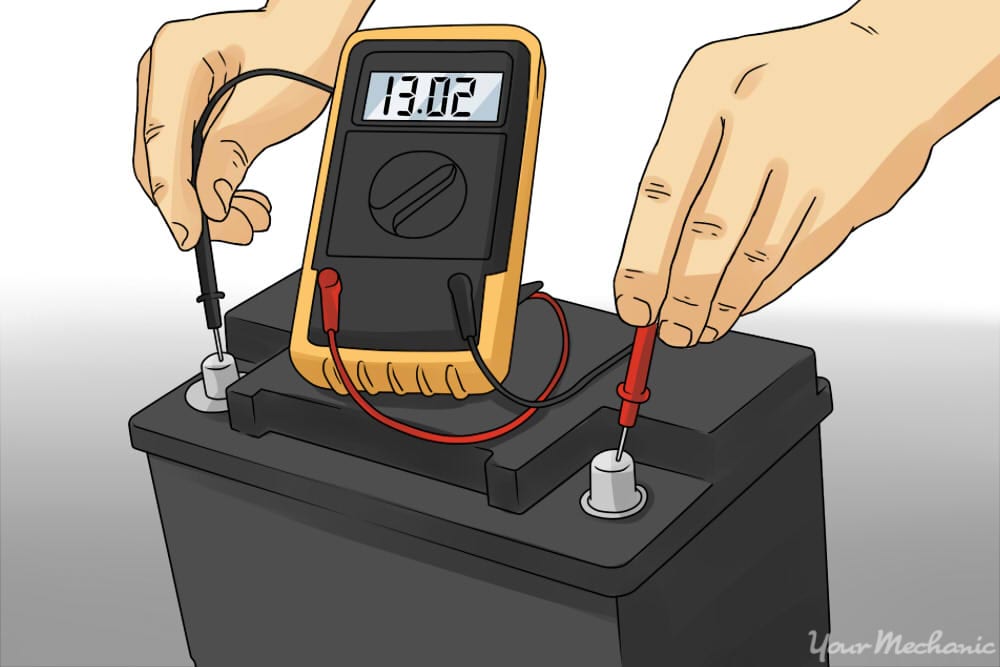
Credit: www.yourmechanic.com
Using A Headlight Test
Testing a car battery without a multimeter is simple. Turn on the headlights and observe their brightness. Dim lights suggest a weak battery, while bright lights indicate a healthy charge. This method offers a quick, visual check of your battery’s condition.
Testing your car battery without a multimeter might seem like a daunting task, but it’s entirely possible with a simple headlight test. This method allows you to assess the battery’s condition using the car’s headlights as an indicator. It’s a practical and straightforward technique that can save you time and money. You might be surprised at how much you can learn just by observing the brightness and behavior of your headlights. Let’s dive into how you can use this method to understand your car battery better.
Understanding The Headlight Test
To perform the headlight test, ensure your car is off. Turn on the headlights and observe their brightness. If the headlights are bright and stable, your battery is likely in good condition. On the other hand, if the headlights appear dim or flicker, your battery might be weak or dying. This simple observation can give you an initial idea about your battery’s health without complicated tools.
Preparing For The Headlight Test
Before starting, make sure your car is parked safely and the ignition is off. Ensure all other electrical components are turned off to prevent any interference. This test is best conducted in a dimly lit area, as it allows you to clearly see the headlights’ brightness.
Interpreting The Results
Bright headlights indicate a healthy battery. But if the headlights are dim, consider checking the battery’s connections. Loose or corroded connections can affect performance. If the connections are secure and corrosion-free, a dim headlight suggests the battery may need charging or replacement.
Personal Insights
I once used the headlight test when my car wouldn’t start during a road trip. The headlights were dim, and it turned out the battery was old and needed replacing. This simple test saved me a lot of hassle. Have you ever thought about how much you rely on your car battery daily? A quick headlight test can be a handy tool to ensure you’re not left stranded.
Practical Tips For Effective Testing
– Check Regularly: Make the headlight test a routine check, especially before long trips. – Observe: Pay attention to any changes in brightness over time; it might signal battery wear. – Seek Help: If unsure, consult a professional. It’s better to address issues early. Remember, you don’t need to be a mechanic to understand your car’s battery condition. With a little attention and regular checks, you can keep your vehicle running smoothly. What steps will you take today to ensure your car battery is reliable?
Checking Battery Terminals
Testing a car battery without a multimeter may seem daunting. Yet, it can be done easily using simple methods. One essential step involves checking the battery terminals. This can reveal much about the battery’s health. A clean and secure connection is vital for optimal performance.
Check For Corrosion
Corrosion on battery terminals can cause issues. It’s often visible as a white, powdery substance. This buildup can hinder the flow of electricity. Use a wire brush to clean off any corrosion gently.
Ensure Tight Connections
Loose connections can lead to battery problems. Wiggle the terminals to check their tightness. If they move, tighten them with a wrench. A snug fit ensures better electrical flow.
Inspect For Damage
Damaged terminals can affect battery performance. Look for cracks or breaks on the terminals. Replace them if you notice any damage. This keeps your battery working efficiently.
Check For Dirt
Dirt on terminals can interfere with connections. Wipe away any dust or grime using a cloth. Clean terminals allow better electricity flow. This helps the battery function properly.
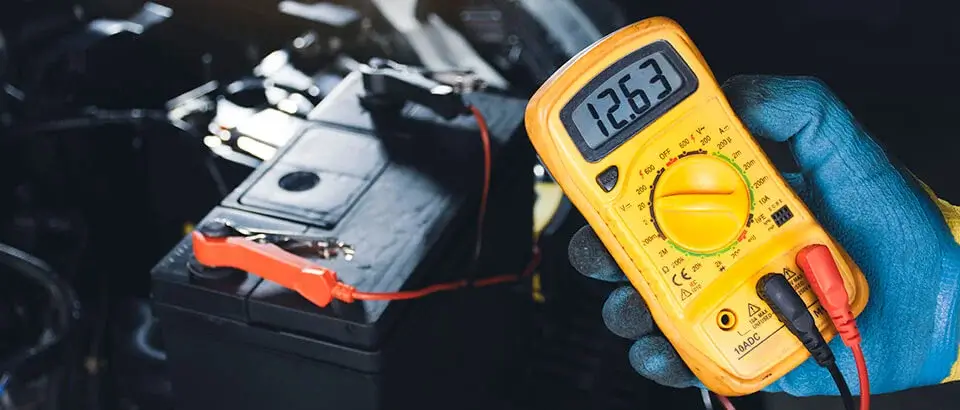
Credit: swiftbatteryspecialist.sg
Frequently Asked Questions
How Do I Test A 12 Volt Battery Without A Tester?
Use a multimeter or voltmeter to check battery voltage. Connect the red probe to positive terminal and black to negative. A healthy 12-volt battery reads around 12. 6 volts or higher. If it’s below 12 volts, the battery may need charging or replacement.
Is There A Way To Test A Car Battery At Home?
Yes, you can test a car battery at home using a multimeter. Set the multimeter to 20V DC, connect the red probe to the positive terminal and the black probe to the negative terminal. A healthy battery should read around 12.
6 volts.
How Do I Check If My Car Battery Is Ok?
Check your car battery by inspecting for corrosion and securing connections. Test voltage with a multimeter; it should read 12. 6 volts or higher when fully charged. Look for dim headlights or slow engine cranking as signs of a weak battery.
Consider professional testing for accurate results.
Can You Test A Car Battery Without It Being In The Car?
Yes, you can test a car battery outside the car. Use a multimeter to check voltage levels. Ensure proper connection between the battery terminals and the multimeter. A healthy battery should show around 12. 6 volts. Regular testing helps maintain battery health and prevent unexpected failures.
Conclusion
Testing a car battery without a multimeter is simpler than it seems. Basic tools and observations can give useful insights. Check the battery terminals for corrosion. A clean connection is important for performance. Try turning on the headlights. Dim lights may indicate a weak battery.
Listen to the engine crank. A slow crank suggests low power. Regular checks can prevent unexpected breakdowns. Stay safe and ensure all tests are done carefully. Remember, understanding your car’s battery health is crucial. Happy driving!