Have you ever found yourself staring at a measuring tape, feeling a bit lost trying to locate the 5/8 mark? You’re not alone.
Many people, from DIY enthusiasts to seasoned professionals, have experienced this common frustration. Understanding the markings on a measuring tape is crucial for accuracy in any project, whether you’re crafting, remodeling, or simply hanging a picture frame. But don’t worry—by the end of this article, you’ll know exactly where to find 5/8 on your measuring tape.
This straightforward guide will not only save you time but also boost your confidence in tackling any task with precision. So, let’s dive into the details and unravel the mystery of measuring tape markings together!
Basics Of Measuring Tape
Understanding a measuring tape can seem challenging at first. It’s a tool used daily in various tasks. Knowing how to read it accurately is essential. This section will explore the basics of measuring tape, helping you find 5/8 with ease.
Types Of Measuring Tapes
Measuring tapes come in different forms. The most common type is the retractable tape. It’s compact and easy to carry. There are also fabric tapes used by tailors. These are flexible and ideal for sewing tasks. Steel tapes are durable, suited for construction work. Each type serves specific needs and preferences.
Common Units And Markings
Measuring tapes display units in inches or centimeters. Inches are divided into fractions, like 1/8, 1/4, and 1/2. The markings are small lines between numbers. 5/8 is marked slightly past the half-inch mark. It’s crucial to understand these units for precise measurements. Centimeter tapes are often metric, easier for conversions.
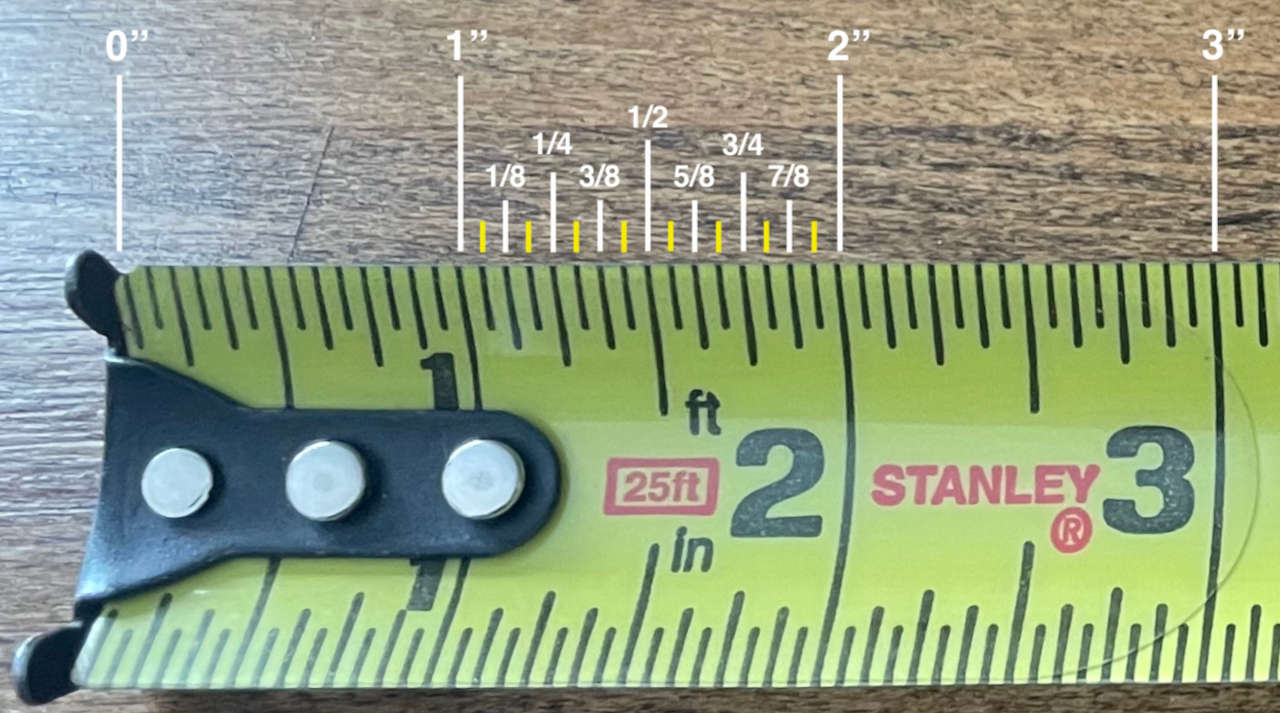
Credit: www.inchcalculator.com
Understanding Fractions On A Tape
Finding 5/8 on a measuring tape is simple. Locate the mark between 1/2 and 3/4. Each small line represents a fraction.
Understanding fractions on a tape can be tricky, especially if you’re not used to working with measurements. However, once you grasp the basics, it becomes second nature. Imagine you’re trying to hang a picture frame or fix a shelf, and you need to find the precise measurement of 5/8 inches on a tape. This is where understanding fractional markings becomes crucial.Reading Fractional Markings
On a measuring tape, fractions are represented by small lines between the whole number inches. These lines can be confusing if you don’t know what each one means. For instance, the 5/8 inch mark is located between the 1/2 inch and 3/4 inch marks. It’s crucial to note that 5/8 inches is slightly more than half an inch but less than three-quarters of an inch. Next time you look at your tape, count the lines between the inch marks to identify fractions. You’ll find that being able to read these markings quickly saves you time and frustration.Converting Fractions To Decimals
Sometimes, converting fractions to decimals can make measurements easier to understand, especially if you’re using digital tools. To convert 5/8 to a decimal, divide 5 by 8, which equals 0.625. Knowing this can help you when working with tools or software that require decimal inputs. Have you ever wondered why some people prefer decimals over fractions? It’s often because decimals can simplify calculations in engineering or architecture. When you grasp how to convert and read fractions, you become more confident in tackling projects that require precise measurements. Understanding fractions on a tape isn’t just about getting the right measurement—it’s about making your work more accurate and efficient. Who knows, maybe this newfound skill will inspire you to take on more DIY projects around your home.Locating 5/8 On The Tape
Measuring with precision can be a lifesaver in both DIY projects and professional tasks. Whether you’re hanging a picture, building a shelf, or sewing a dress, knowing exactly where 5/8 is on a measuring tape is crucial. You might have found yourself squinting at those tiny lines, wondering if you’re getting it right. Let’s make this simple and straightforward.
Identifying The 1/8 Increments
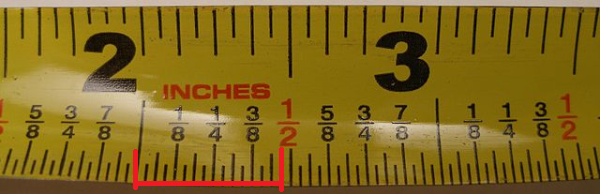
Your measuring tape is a tool of precision, marked with lines of varying lengths. The smallest lines often represent the 1/8 increments. These are the building blocks for understanding measurements like 5/8.
Take a close look at the tape. Notice how some lines are longer than others? The longest are usually the whole numbers or inches. The mid-length lines often mark half inches, and the shortest ones are the 1/8 increments.
If you’re unsure, count from zero. You will see a pattern emerge, making it easier to spot these crucial increments. This helps you pinpoint exactly where 5/8 lands.
Steps To Find 5/8 Mark
Start by locating the nearest inch mark. From there, count the smaller lines. The fifth line after an inch mark represents 5/8.
Visualize it: if you’re at the 1-inch mark, count five of those smaller lines. You’ve arrived at 5/8! Practice this a few times, and you’ll find it becomes second nature.
Consider this: How many times have you estimated a measurement only to find out it was slightly off? With the correct identification of 5/8, your projects will have that professional touch.
Next time you reach for your measuring tape, remember these steps. The accuracy will save time and enhance the quality of your work. Don’t let those tiny lines intimidate you. Embrace them as your allies in precision.
Credit: www.johnsonlevel.com
Tips For Accurate Measurement
Measuring accurately ensures your projects turn out perfectly. Whether you’re a DIY enthusiast or a professional, knowing how to use a measuring tape is crucial. Finding 5/8 on a measuring tape can be tricky. But with the right techniques, you can measure with confidence. Here are some essential tips to achieve accurate results every time.
Avoiding Common Mistakes
Start with a steady hand. Wobbly tapes lead to errors. Ensure the tape is flat against the surface. Even slight bends can distort measurements. Always double-check your reading. Misreading fractions is a frequent mistake. Compare with known lengths to confirm accuracy.
Maintaining Tape Accuracy
Keep your tape measure in good condition. A bent or twisted tape provides inaccurate readings. Store it properly to prevent damage. Avoid dropping it on hard surfaces. Wipe it clean after use. Dirt can affect the tape’s markings.
Regularly check for wear and tear. Replace worn-out tapes promptly. This ensures reliable measurements every time.
Tools For Better Precision
Finding 5/8 on a measuring tape can be tricky if you’re not used to fractions. But with the right tools, measuring with precision becomes much easier. Whether you’re working on a DIY project or crafting a masterpiece, getting the measurements right is crucial. Precision not only saves time but also ensures the perfect fit and finish. Let’s explore tools that can help you hit the mark every time.
Digital Measuring Tools
Digital measuring tools are game-changers in the world of precision. They offer accuracy that is hard to achieve with traditional tape measures. A digital caliper or laser measure can display measurements in various units, including fractions like 5/8. Imagine not squinting at tiny lines and numbers! These tools can often store measurements, making them perfect for complex projects. Have you ever misread a measurement and ended up cutting twice? Digital tools can reduce such errors significantly, saving both time and materials.
Using A Caliper
Using a caliper can take your measuring skills to the next level. Whether you’re crafting a piece of furniture or doing some metalwork, calipers provide exceptional accuracy. They can measure both inside and outside dimensions, making them versatile for various tasks. Picture yourself measuring the thickness of a board or the diameter of a pipe, all with precision. Calipers come in various types, including dial, digital, and vernier, each offering its own advantages. Have you tried using one yet?
Choosing the right tool for your measurement tasks can make a significant difference. Whether you opt for digital tools or a reliable caliper, precision is within your reach. How do you ensure accuracy in your projects?

Credit: www.youtube.com
Frequently Asked Questions
Where Is 5 8ths On A Tape?
5/8 inch is five small marks past the 1/2 inch mark on a standard tape measure. This is typically located between the 1/2 inch and 3/4 inch marks. Look for the fifth line after the 1/2 inch.
How To Measure 5 8ths?
Use a ruler marked in eighths of an inch. Measure to the fifth line after the zero mark. If using a measuring cup, fill it to five-eighths of its capacity. For more accuracy, use digital tools like calipers or scales for precise measurements.
What Size Is 5 8ths?
5/8ths is 0. 625 inches in decimal form. It’s slightly larger than half an inch. In metric, 5/8 inches equals approximately 15. 875 millimeters. This size is commonly used in construction and woodworking for precise measurements.
What Is 5 8s Of An Inch?
5 8s of an inch equals 5/8 inch. This is a fraction representing five parts of eight total parts. Convert it to decimal as 0. 625 inches. This measurement is commonly used in construction and DIY projects for precise dimensions.
Always use a ruler or tape measure for accuracy.
Conclusion
Finding 5/8 on a measuring tape is simple with practice. Measure tapes often mark fractions clearly. Look for the 5/8 mark between 1/2 and 3/4. It helps to understand where each fraction fits. Practice with different measuring tapes if needed.
Familiarity grows with each use. Remember, it’s about visualizing fractions. Once you find 5/8, measuring becomes easier. Keep practicing and soon it will be second nature. Accurate measurements save time and effort in projects. Always double-check your tape for precision.
Happy measuring!