Have you ever found yourself stranded with a car that just won’t start? It’s a frustrating experience that can ruin your day.
But what if you could prevent this? Testing your car battery is a simple task that can save you from unexpected breakdowns and keep your vehicle running smoothly. You might wonder if you can really do it yourself, and the answer is yes! With a few basic tools and some easy steps, you can assess your battery’s health right at home.
This article will guide you through the process, ensuring you feel confident and empowered to take charge of your car’s reliability. Stick with us to uncover the secrets of battery testing and keep your car in top shape.

Credit: www.youtube.com
Safety Precautions
Always wear glovesand gogglesto protect your skin and eyes. Car batteries can leak acid. Acid is dangerous if it touches you. Make sure you work in a well-ventilated area. Bad gases can come from the battery. Bad gases can make you sick. Keep tools away from the battery’s top. Metal tools can cause a short circuit. Be careful of sparks. Sparks can start fires. Check the battery for cracks or leaks before testing. If you see any damage, do not use the battery. It can be unsafe.
Credit: www.yourmechanic.com
Tools And Equipment
Testing a car battery is easy with the right tools. You need a multimeter to check the battery’s voltage. This tool is important for getting accurate readings. A battery load tester is also useful. It helps in checking the battery under load. Safety is important, so wear safety goggles to protect your eyes. Gloves will keep your hands safe from acid. Use a wire brush to clean the battery terminals. Dirty terminals can affect your test results. Keep a battery charger handy. It helps if the battery needs a charge. A flashlight is useful in dark places. It helps you see the battery clearly. With these tools, testing is simple and safe.
Step-by-step Testing
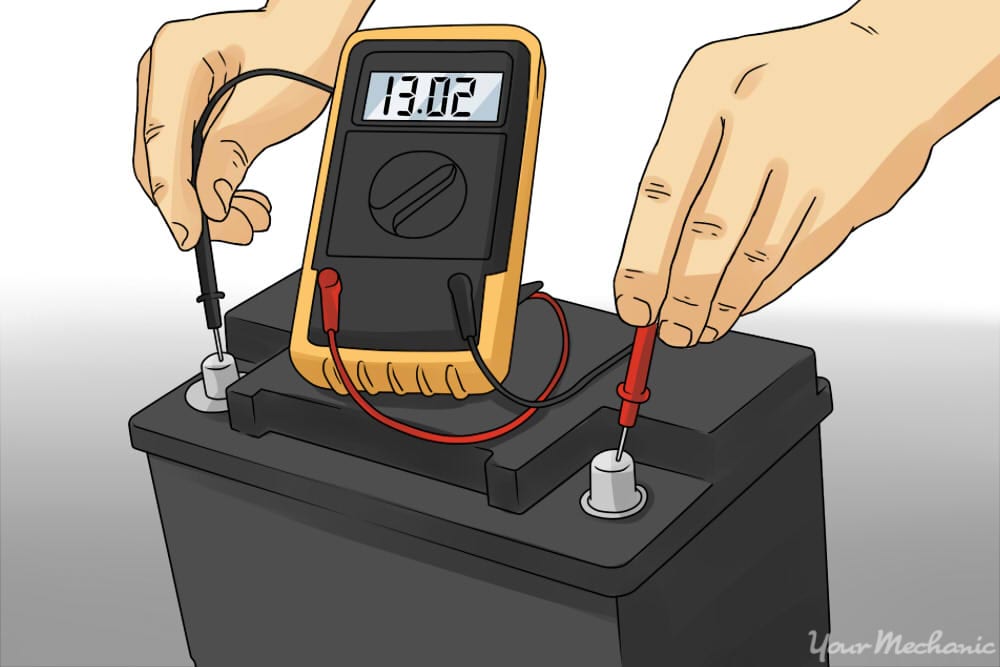
Testing a car battery is important. First, find the battery in the car. It is usually under the hood. Look for two terminals on it. These are the battery ends. Wear gloves to stay safe. Use a multimeter for testing. Set it to DC voltage. Connect the red lead to the positive terminal. The positive is marked with a plus sign. Connect the black lead to the negative terminal. The negative is marked with a minus sign. Check the reading on the multimeter. A healthy battery shows between 12.4 and 12.7 volts. If the reading is lower, the battery might be weak or needs charging. Remember to turn off the car while testing. This helps to get a correct reading.

Credit: shop.advanceautoparts.com
Frequently Asked Questions
How Can I Test If A Car Battery Is Good?
Use a multimeter to check the voltage. A healthy battery reads around 12. 6 volts or higher. Perform a load test to check performance under stress. Ensure the battery terminals are clean and secure. Inspect for signs of corrosion or damage.
Consult a professional for a comprehensive assessment.
How To Tell If Your Car Battery Needs Replacing?
Check for slow engine crank, dim headlights, or frequent jump-starts. Inspect battery for corrosion or swelling. Listen for clicking sounds when starting. Battery over three years old might need replacing. Consider professional testing for accurate diagnosis.
How Can You Tell If A Car Battery Is Bad?
Check for slow engine crank, dim headlights, and electronic issues. Inspect for corrosion on battery terminals. Test the battery voltage; it should be around 12. 6 volts. If it’s consistently low, the battery might be bad. Consider professional testing for accurate diagnosis.
Can You Test A Car Battery While It’s Still In The Car?
Yes, you can test a car battery while it’s still in the car. Use a multimeter to check voltage. Ensure the engine is off and accessories are disconnected. A fully charged battery should read around 12. 6 volts. Testing in-car helps quickly diagnose battery health without removal.
Conclusion
Testing a car battery is simple and important. It helps prevent unexpected breakdowns. Regular checks ensure your vehicle runs smoothly. Use a multimeter for accurate results. Follow safety measures while testing. Understand the readings to diagnose battery health. Replace if necessary to avoid inconvenience.
A healthy battery boosts your car’s performance. Keep tools ready for future tests. Save time and money with routine checks. This knowledge empowers you to manage your car better. Enjoy driving with confidence and peace of mind. Stay proactive and ensure your vehicle’s reliability every day.